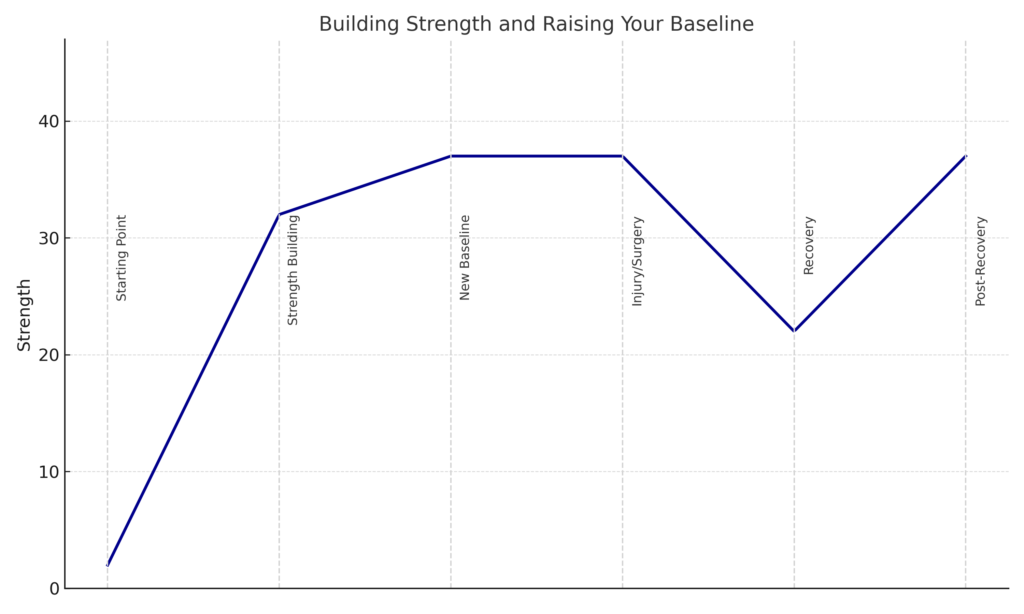
We all want to fit in and be normal. The years of working with clients has shown me that nobody is normal. We’re all a bit weird (apart from me, obviously).
Nothing unusual here
But, do we really want to be normal?
What is normal? That’s going to depend on your peer group. Normal might be smoking/vaping, binge drinking and frequent takeaways. Normal could also be eating whole foods, going to the gym regularly and working on your mental health.
Here’s some quick stats:
- 83% of adults don’t eat their “5‑A‑Day” portions of fruit and vegetables. Opal fruits don’t count.
- 64% of men and 71% of women fail to do the recommended two days of muscle‑strengthening per week
- The typical adult consumes double the recommended amount of free sugars
Because of the link between those stats and poor health outcomes (disease, frailty, reduced health span and life span), normal isn’t sounding so good is it?
Do I need to ditch my Friends and Family?
It depends – if they like Ed Sheeran, yes. But otherwise, no, you can keep ‘em. Sorry, I’m not giving you permission to say goodbye to your mate because he likes a Freakshake with a side of dirty fries, and you can’t say no. It makes complete sense that you would want to fit in with those around you, it’s human, but if it doesn’t align with who you want to be, then you’ll need to learn to say no. It can be hard when someone insists on the cake or the vape, or the vapecake (soon to be in shops). “Don’t be boring” “you only live once” “one won’t hurt” to which you will reliably reply “ah go on then”.

Damn, okay, that does look good. Just this once then…
How does one respond to such comments?
“No thank you”. Yep, that’s it, and stick to it. Why? Because you know giving into your desire, or the desires of others will mean you’ll never get to the future self that you imagine yourself to be. And look, you’re not going to get it right every time. So when you do give in, that doesn’t condemn you for life – you have another opportunity to try next time. You could also suggest doing something else, like meeting for a walk instead. Take a Tracker bar with you if you’re really peckish.
Finding Your Fitness Friends
It’s much easier to stay fit and healthy when you’re constantly reminded of it.I work in a gym so I’m surrounded by people trying to get better. Listening to podcasts, reading books, watching videos on the subject will help to keep it top of mind. You can also start to connect with others at work, friendship group or family who exercise, and talk about your latest workout or new things you’ve been trying in the kitchen. By doing this, you’re creating a new network but you’ll also create some social accountability
“hey Bob, how was the gym last night?”
“I didn’t go, I ate a big bucket of cheesy chips instead…but I will be going tomorrow” is how a conversation might go (don’t use this exact script).
Be the Mole
Infiltrate the group with your new healthy mindset and it might spread to others once they see the benefits it’s given you. It won’t if you force it though, people need to come to their own decisions in their own time, just like you did. They’re entitled to live their life how they like.

These stock photo websites don’t always have the exact images you need
So, take pride in being different if that’s what you need to get closer to who you really believe you can become.