Should I Be Motivated to Exercise?

When you’ve been working with clients for a while (something like 10 years!), you start to notice common beliefs that people tend to hold when it comes to exercise: that one should be motivated and look forward to training.

As I’ve said before, training is hard labour. Who wants to do hard labour these days unless you have to. Thank you to all lads who laid the bricks in our house, my hands are just too delicate for such things. But, whilst hard labour is well…hard, it does give our lives great benefit – and to do the hard things isn’t motivating or fun.
bad bricklaying

This isn’t going to blow down in the wind, is it?

Motivation:
Do some people get motivated to exercise? Sure, I call them weirdos. When I wake up at 05:45 on a cold English Monday morning, do you think I’m motivated to work out? Obviously not. Do I enjoy the 5th rep of a gruelling set of deadlifts? Definitely not. How do I do it then? I just do it (I’m not sponsored by Niké yet but it’s only a matter of time).

It’s not that I’m more disciplined than you, it’s that I’ve trained my mind to focus on something different and now it’s become a habit. I am thinking about how I feel immediately afterwards: a sense of achievement (I did the hard thing! yay!), what my body looks like (if you’ve stuck with it for longer than 6 weeks), feels like and how it performs day to day. Without mental training, our brain is going to focus on the cold weather outside, the hard work in the gym, fumbling around trying to find our neon sweatband and trying not to wake the wife. Once you’ve been doing it for long enough and you’ve seen the day to day benefits, it just becomes one of the many positive things you do.

happy gym person

We all know this guy.

Discipline:
Whenever I mention discipline to clients, I worry their immediate response is that they feel they lack discipline and that they should have the discipline of a Navy seal. That’s not a realistic starting point, considering the SEAL is the elite of the elite and the rest of us… forget to make the bed. Instead, it’s more helpful to think about how we can build discipline when it comes to certain behaviours we want to carry out.

Building Discipline:
You may never be motivated or find impactful daily errands fun, but is everything important in your life motivating or fun? Probably not. We just do it because we understand that if we don’t do it, the trade off isn’t worth it. I know if I don’t go to the gym, the trade off is I’m weaker, less muscular, and less healthy and it’s not a trade-off I’m willing to make. So, do the behaviour that feels hard and uncomfortable (it should feel this way, at least at first) and know that with enough reps, you’ll see and feel the benefits and then you can focus my mind on that, rather than on what’s hard. Of course, hiring a coach to help you with the initial difficulty of starting will make things easier for you but there are many roads to a healthier life.

seal

I didn’t have time to colour him Navy for the joke to work

Progressive Overload Principle:
You’re not going to go into the gym and squatting 100kg on day one. You start off with practising the movement pattern at first, then once you can do it well you then add an empty bar to your back, then in the next session you add 5kg and so on. The same principle is true for habits. If you start too hard, you’re setting yourself up for failure.

So, watching Rocky might get you motivated once or twice, but it’s not the thing that’s going to keep you going back into the ring.


PT Shaun

Posted in Fitness | Tagged , , , , | 3 Comments

Exercising as we Age

I was recently speaking with one of my client’s parents who told me that she doesn’t like exercise. She’s not the first person to say this to me, but I always counter with something like “have you tried every type of exercise?” whilst removing my sunglasses and raising my left eyebrow. The answer is usually no. This is usually when people stop talking to me… Plus, more often than not, people will have had a bad experience (or a boring one!) and stop because they think that’s what exercise is.

I’ve shown many clients over the years that exercise can be many different things and there’s benefits to all of them. For example, the gym member who does a tour of the gym machines with no real intention, flip-flapping their legs about on a machine they think is working their calves when it’s actually working their biceps, I get why they don’t continue.

Gym

I think I’ll go home…

When I take that person to the gym and teach them how to move their bodies in their own unique way, and train to get stronger, where everything is measured so we can monitor progress, we find that their dislike of exercise was clearly down to their original approach.

We’re living very long lives now and the research is quite clear: that we can slow down the ageing process by forcing our bodies to adapt to the stresses we create. Yes, adding stress in this context is actually beneficial for us.

Happy Child

This human is actually 45 but they managed to reduce their physical age by bench pressing…

Resistance Training:

  • Increases your bone toughness
    • If you fall, your bones are going to be less likely to break
  • Reduces muscle loss
    • Muscle = independence to do things yourself, which changes over the course of a life from giving your child a piggy back to being able to sit on the toilet
  • Improves your balance and coordination
    • This means you’re less likely to fall in the first place (not helped by brandy)
  • Slows down the ageing process
    • You’ll feel younger and more capable!

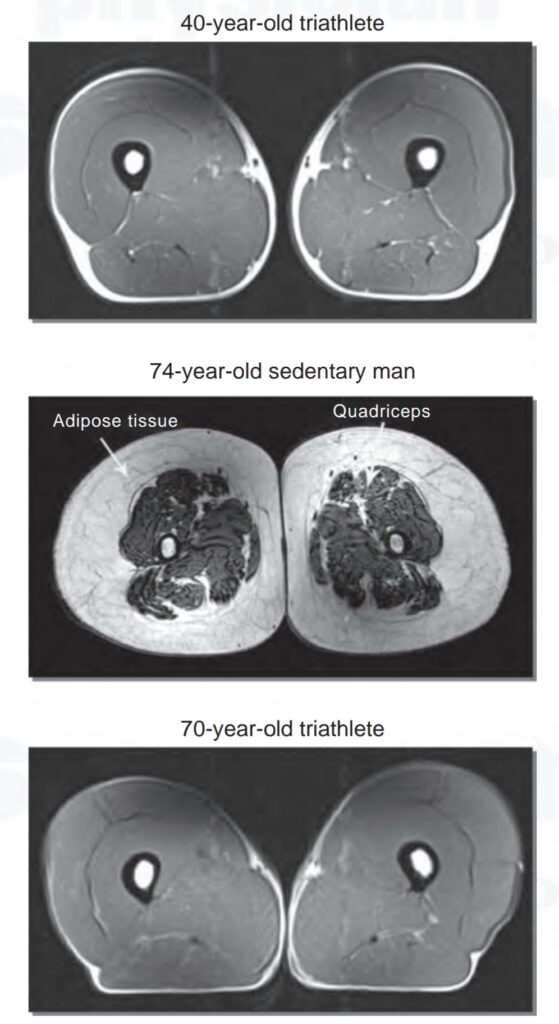
But because we can’t see it, we don’t know what’s going on at the base level. The image below is one I often share with clients because it allows us to have x-ray vision and see what actually happens below the surface and it’s quite startling:

cross_section

The takeaway isn’t that you need to be a triathlete (I find the idea alone quite exhausting), it’s that we do have the ability to affect our bodies so they perform better and doing some exercise is going to affect the quality of your life in a really positive way.

So, if you want to keep your body strong and functional, finding your exercise is the way.

PT Shaun

Posted in Fitness, Health | Tagged , , , , , , | Leave a comment

Thoughts on Turning 40

I remember thinking of 40 as old, and 40 was old but it’s not anymore. With advancements in how we understand the human body in regards to exercise, nutrition, sleep, stress and the environment, it’s no surprise we look different. I’m living my best coal-free lungs life.

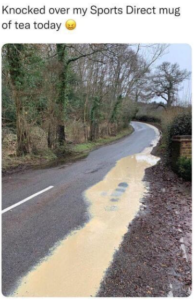
Once upon a time we’d be lifting heavy farm… stuff (you can tell I’ve never done any manual labour) which was great for keeping you strong but nowadays, the heaviest thing we lift daily is a Sports Direct mug as we sit at our desks sending passive aggressive emails to colleagues (kind regards, PT Shaun).

I was once pretty unhealthy with high blood pressure, prescribed heart medication and I was more than a bit wibbly around the edges. I made some big changes and yes, it was challenging at first, but once you’re in a rhythm, it becomes your new normal.

By training regularly I feel strong and look good.

By eating a healthy diet, I feel healthy and able.

By sleeping well I feel focused and recovered.

By managing my stress I feel happy (subject to change based on whether I’ve had lunch).

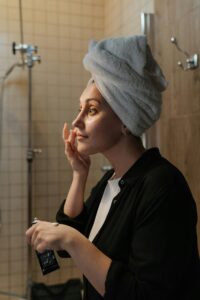
To me, a big part of being healthy is slowing down ageing. Yes, it’s much easier to apply a cream but that’s only the surface level, lifestyle choices are deep.

Woman applying cream

This woman is regretting not deadlifting today

Things I’ve learned:

  • Training doesn’t have to be gruelling
    Find something you don’t hate, but ideally love. Cardio is amazing for you, but if you hate it and it stops you going to the gym, find something that’s active that you don’t hate.
  • Food doesn’t have to be boring
    There are so many quick, healthy and more importantly tasty recipes available online. The idea of “rabbit food” is passé. 
  • Don’t expect to be highly motivated
    The cheerleaders are not out every morning that I go for a workout. I go to work, I brush my teeth, I pay my taxes, I go to the gym. Those are just things I do.
  • You have the freedom to go out for a meal and still be healthy and social
    Yes, eating out can make fat loss more challenging but not impossible. Plan before you go and make the best choice that fits with who you want to be.
  • Just turn up
    If I just turn up every week, it doesn’t matter if my training and diet isn’t “perfect”, I’ll actually greatly benefit from being suboptimal.
  • Follow a training plan and track your workouts
    Without one, you’re just spinning your wheels and honestly, it’s just plain boring! It’s no surprise people don’t stick to it when they have no direction or goal.
  • Nobody cares about you
    Sorry, but this is especially true in the age of Tik Tok/Instagram. People are much more interested in themselves than you.
  • Once you do the healthy habits for a long enough time, they become pretty easy
    Yes, some things can slip back in but that’s okay, we can notice it and try again.
  • I’m sending a signal
    Every time I train, I’m telling my body “I need my bones, ligaments, tendons and muscles to be strong”. That’s what training against a resistance does.

You can be your strongest and healthiest at 40 and older, which I’ve seen happen with many of my clients. Right now is the best time to start.

I hope you found that useful and if you have any questions or comments drop me a message, and if you think someone you know would benefit from this article, please forward it to them.

PT Shaun

Posted in Fitness | Tagged , , , , | Leave a comment

Corded Vacuums VS Cordless: The Ultimate Battle

Don’t worry, I haven’t started a new career in household electrical reviews even though I now have reached an age where vacuum cleaner conversations are not only common, but sadly quite interesting. Next month’s article will be on pensions so look forward to that…

Corded VS Cordless
We used to have a Henry vacuum and “he” would be taken out once a week to give the carpets a good clean so that if the Queen were to visit, she would be happy to walk on the shag-pile, barefoot. Taking the vacuum out of the understairs cupboard was a faff. Henry was safely nestled at the back, and in his comfort he didn’t want to get out. He would throw dumbbells on your foot, pegs all over the floor and the long metal part of the vacuum hose would inevitably hit you in the head (not even a UFC fighter could dodge the understairs tsunami of accumulated household items coming your way).

Vacuuming Floor

This may be the most boring stock photo of all time.

Enter the Dyson/Shark/Etc cordless vacuum. It’s light, small, powerful and almost a pleasure to use. Our vacuuming frequency has increased 700% (I got an E in Maths, and Mrs. Mashford was being generous). Both the King and Queen could visit any day of the week and we would not be embarrassed to invite them into our humble abode. “Here your Majesty, please enjoy our exquisite range of broken biscuits”.

Friction
I want clean carpets. In scenario one (Henry standing his ground in the cupboard), there was a lot of friction and the goal I had in mind was possible to achieve, but mentally and logistically, it was harder. In scenario two (cordless freedom), there was very little friction and so my goal was very easy to achieve.

Think about the habits you want to change. How can you reduce the friction for the healthy habits, and increase the friction for the unhealthy habits? For example, if takeaways are something you want to cut down on then you can uninstall the food delivery app and delete your account. You can still order take-away, but now there’s more friction and it’s now not a streamlined process.

In the opposite direction, how could we reduce the friction to have healthier meals so we’re less likely to be in a situation where a take-away is an option? We could have meals prepared and put in the fridge/freezer, use food prep services like Prepkitchen, and cook simple meals like stews.

Friction

This image represents friction in case you were unfamiliar.

I always put out my gym clothes and gym bag the night before, so when I wake for my early training session, it’s easy. The nights where I have forgotten to get them out, I find the mornings more of a challenge. I still go to the gym of course, but I feel less friction and it’s rather pleasing.

Most unhealthy habits, when you look at them more closely you’ll notice there’s very little friction. The same is true for healthy habits but flipped, which is why people are less likely to do them. If getting healthier is important to you, think about how you can adjust the friction accordingly.

I hope you found the article useful, and if you think someone could benefit from reading it, please share it.

PT Shaun

Posted in Health | Tagged , , , , , | Leave a comment

The 3 Types of Nutritional Analysis and What it Means for You

I often work with clients who have an interest in nutrition. They’ve read books, watched YouTube videos and have generally tried to apply some of the lessons they’ve learned to what they do. The aim of this short article is just to give a context for the field of nutrition and all of its complexities.

Once upon a time, if I wanted to understand something about nutrition I would need to travel to a place called “the library”. They still exist (so I’m told) but these days, if we’re researching a subject, we have the information right at our fingertips. Whilst this is amazing, like all things, there is a trade-off. We are now flooded with information which can make us feel like we’re drowning and we don’t know the difference between a life ring or ring doughnut.

Pink Doughnut

There are 3 main types of nutritional information and if you like to keep yourself in the know, it’s important to arm yourself with this knowledge so you’re able to keep an open mind and not get stuck in one camp of a particular diet cult. If you’ve already started writing your placard which says “The Eye Ball Diet Gave me 20/20 Vision” , it’s too late, I can’t help you.

Researchers – These are the people in the lab doing the experiments and dealing with all the complicated elements required for a study:

  • Recruiting participants (would you like to come and stay in a white box for two weeks while we feed you desiccated rat liver which we want to prove will increase your male pattern baldness?)
  • The specifics of the study to obtain the result they’re looking for
  • The equipment
  • Loads of other stuff (I’m trying to keep this article readable!)
  • This is science for scientists

Research Analysis – These are the people who look at the studies and think about a bigger context, real world application and all the nuances that only nerds think about. They have the greatest amount of freedom of the three to change their mind when new data comes in. This is the level with the best, most applicable information. As a Personal Trainer and Nutritionist, this is my preferred way to acquire information so that I can help my clients get the best results. But, as a reader, it’s time consuming and full of caveats so it can feel like you don’t know which direction to take.

Nutrition Books – Authors take all the information and present it in a way to the public in a nice, clean, digestible and interesting way. They’ve collated all the studies, trimmed off the fat and created a clear path that you can follow. This is where most people will get their information who consider themselves informed about nutrition which is great. There are potentially some big drawbacks though. Because they’re printed, they cannot be updated in real time. An author can update the book in their blog, but I don’t think most people are reading that, and they can release an updated version of the book, but by the time it comes to print, it may already be outdated. This is nobody’s fault, it’s just the nature of this medium. If a product is released alongside the book, then there is even more incentive for the author to stick with their narrative. Unfortunately, in this situation the incentive isn’t better science. For example, let’s say you’re selling a product (supplements or a device) which is based on your argument in the book you’ve published, what do you do if the central theme gets thoroughly debunked?

In summary, I think it’s great to learn about nutrition at any level and by understanding the benefits and limitations of each type, you can make better choices about the changes you want to implement.

If you want further advice or want to know what the best approach for you might be, feel free to get in touch.

PT Shaun

Posted in Health | Tagged , | Leave a comment